

Like rivers in concrete, SIT graduates are urged to persevere in the work of change
August 10th, 2026 | SIT Graduate Institute
At School for International Training’s 60th commencement on Saturday, 28 graduates received their master’s or doctoral degrees.
The rain was coming down as Kylie Parks walked across School for International Training’s campus during one of the summer residencies for her doctoral program. As she walked, she noticed something in the pavement beneath her feet.
“Water fell in the same place on this road and actually shaped something as hard as concrete. And now, all these years later, the water had paths to flow down when it rained,” Parks said.
Standing before her fellow graduates at SIT’s 60th commencement, Parks returned to that image as she delivered the student address.
“I think that image of rivers in concrete is the truest thing anyone could tell me about the work I do—about the work we all do, and the work our degrees actually prepare us for—regardless of the title on your diploma,” Parks said.
“We all show up day in and day out in communities, in systems and institutions where nothing is resolved quickly. And we do work whose effects we may never personally witness. Yet, day by day, year by year, we trust that a groove is forming, even when the concrete still looks untouched in the dry seasons.”
Perseverance is not pretending problems do not exist. Perseverance is seeing the world clearly—and choosing to continue anyway.
Keynote Speaker Barbara Smith
It was a fitting metaphor for a commencement centered not only on what 28 graduates had accomplished, but on the work still ahead of them—and the perseverance, relationships, and belief in their own abilities and lessons learned that will sustain them along the way.
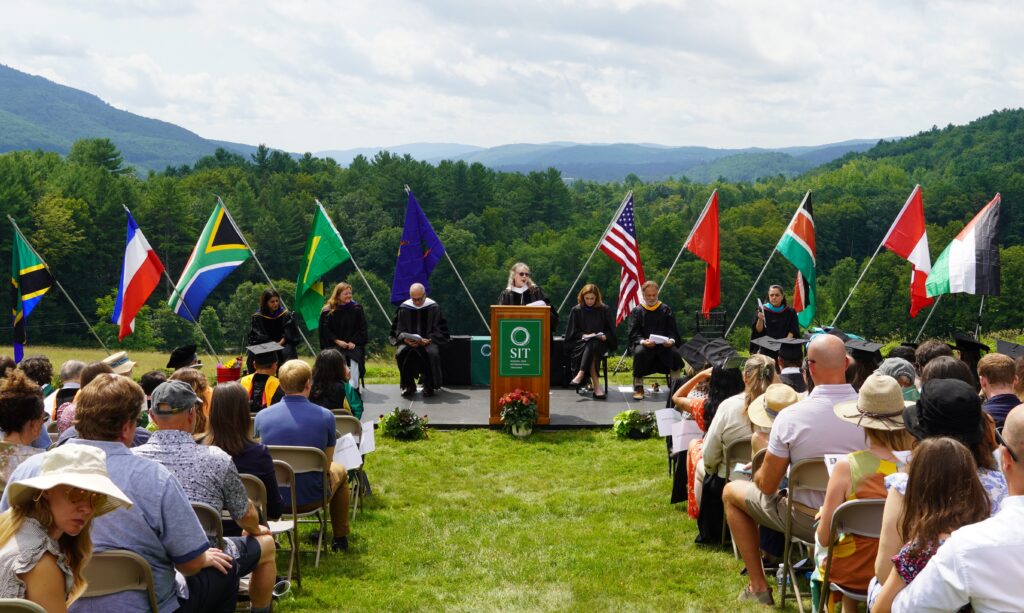
SIT faculty, staff, and board members from around the world gathered on SIT’s front lawn, joined by nearly 100 family members, friends, and guests. Flags from around the world framed the stage, representing the graduates’ home countries and the locations of SIT’s global learning centers.
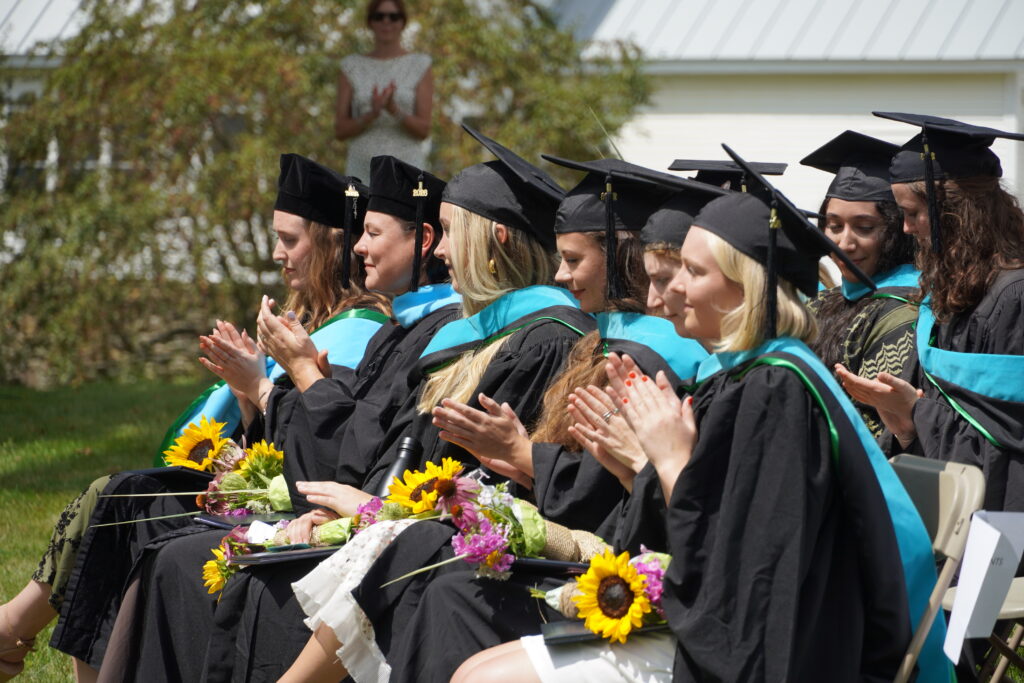
The graduates received master’s degrees in climate change, international relations, humanitarian assistance, international education, and sustainable development, as well as doctorates in global education.
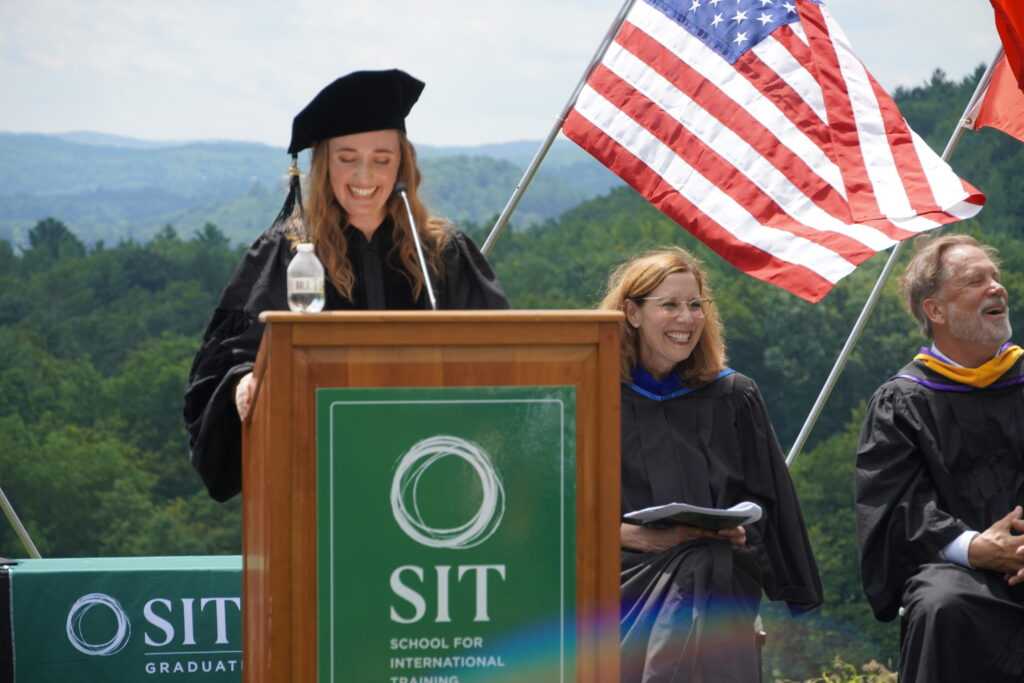
Parks, who received her EdD, told the crowd that SIT attracts a “very special type of person”—people willing to take on complex challenges where progress can be slow, uncertain, and difficult to see. That theme carried throughout the ceremony.
Keynote speaker Barbara Smith, vice president for Peace Programs at The Carter Center in Atlanta, drew on a career overseeing projects in democracy, human rights, conflict resolution, and the rule of law worldwide. She reminded graduates that neither history nor careers unfold predictably.
Instead, meaningful change often comes through perseverance and human connection—the “quiet work that doesn’t make international headlines.”
“It begins when people choose dialogue instead of violence. It begins when people decide that dignity and coexistence are worth fighting for,” Smith said. “That kind of work rarely happens overnight. And neither does progress.”
“Perseverance is not pretending problems do not exist. Perseverance is seeing the world clearly—and choosing to continue anyway.”
Smith encouraged graduates to stay grounded in service and principle as circumstances change and to rely on the relationships they have built at SIT. Careers devoted to solving difficult global problems, she said, require colleagues and mentors willing to both challenge and support one another.
“Graduates, the world needs people who can work across cultures and across differences,” Smith said. “And it needs people who still believe that human beings can solve problems together. That is what SIT has prepared you to do.”
Acting SIT President and World Learning CEO Carol Jenkins also focused on the power of human connection. Referencing a recent visit by U.S. Representative Becca Balint to campus, Jenkins spoke about what Balint called “relational energy”—the energy people bring to their work when they genuinely believe in its purpose and in one another.
“This is not enthusiasm that is manufactured or performative, but the genuine energy that comes from believing in a purpose, caring deeply about people, and bringing your whole self to the work,” Jenkins said.
“Skills matter. Integrity matters. Authenticity matters. Courage matters. But enthusiasm is what inspires others to join you on the journey. And if I’ve learned anything about SIT graduates, it is that you are not just on a journey—you are blazing new trails.
“The world needs leaders who not only know what they stand for, but who inspire others to believe that together we can build something better,” Jenkins said.
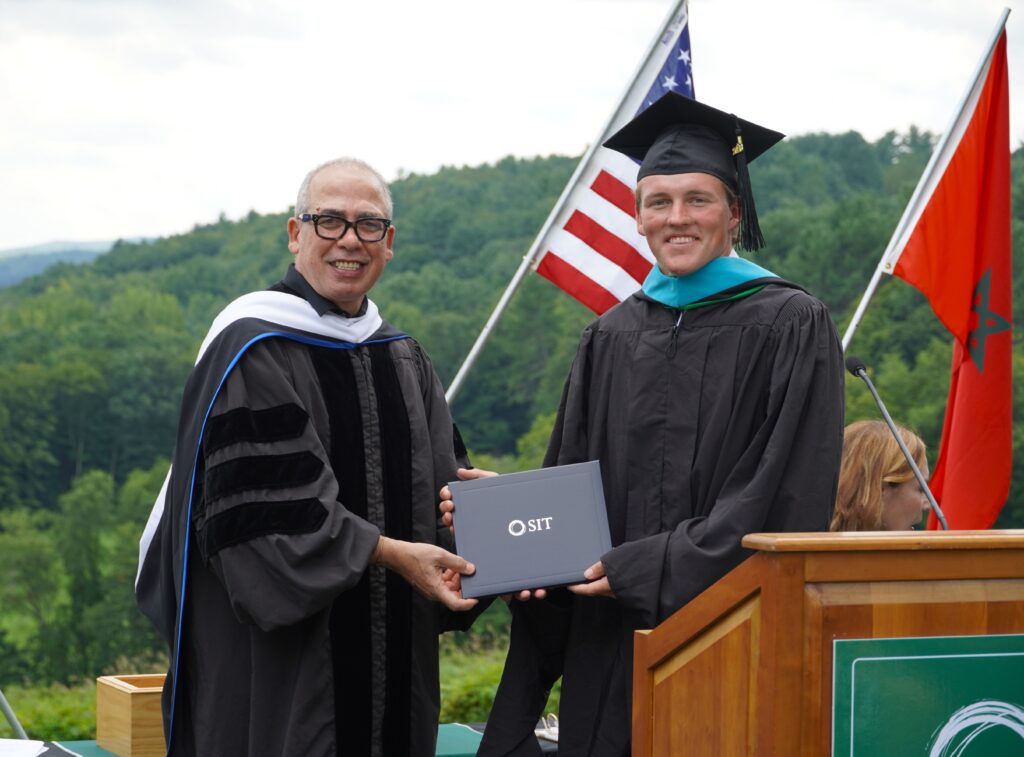
For SIT Professor Emerita Dr. Sora Friedman, those relationships have stretched across decades.
Friedman first came to SIT as a master’s student in 1984 before building a career that included teaching at SIT’s Graduate Institute. In her faculty address, she reflected on the people who shaped her academic and professional life and encouraged graduates to continue building—and trusting—their own networks.
“I want to acknowledge the power of SIT students and alumni. Thankfully, climate change, education, humanitarian affairs, diplomacy, sustainable practice, and social change, all of the sectors within which you work, will benefit from your contributions,” Friedman said. “Ask others what they think, and listen, truly listen to understand as you gather information. And then, trust your gut.”
Rhonwyn Hwan-Chi Hagedorn can also personally attest to the power of SIT’s large network—her parents met as students at SIT. Hwan-Chi Hagedorn, the director of operations for United Edge, a social enterprise dedicated to supporting and empowering individuals and organizations working towards social change, received her master’s in sustainable development practice on Saturday.
Carla Lineback, director of alumni and external engagement, welcomed all the graduates into SIT’s global alumni community of more than 130,000 changemakers. The network includes people who have participated in SIT graduate, undergraduate, certificate, and non-degree programs since the institution’s founding in 1964.
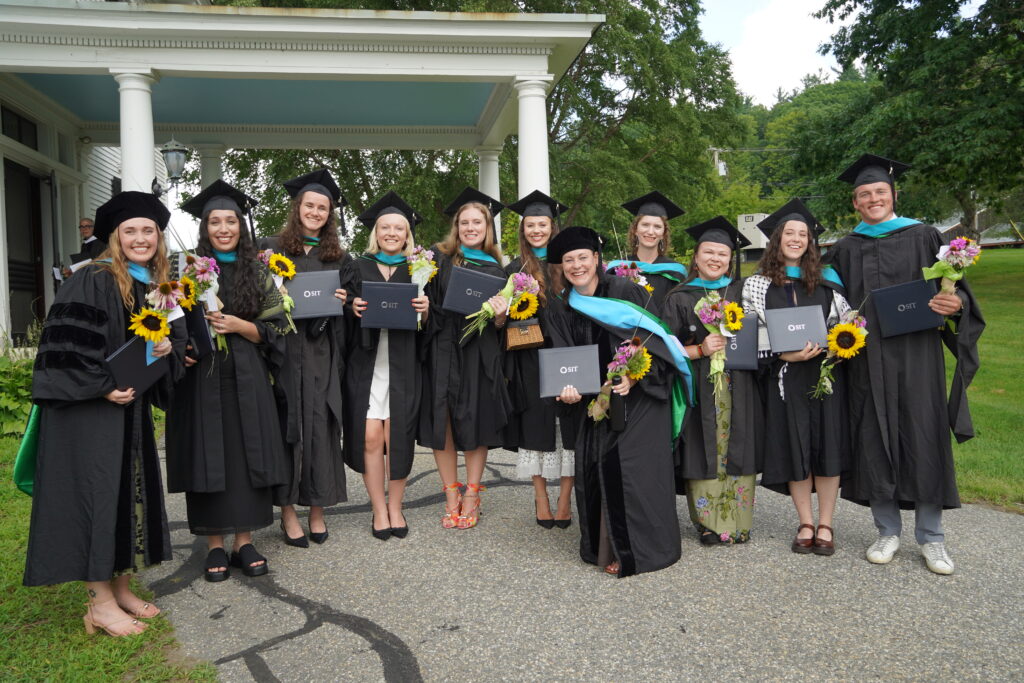
For Saturday’s graduates, commencement marked the culmination of programs intentionally designed to cross borders and connect learning with practice. SIT’s one-year global master’s programs combine study and field-based research at international learning centers, while its doctoral programs allow working professionals to combine online coursework with short international residencies.
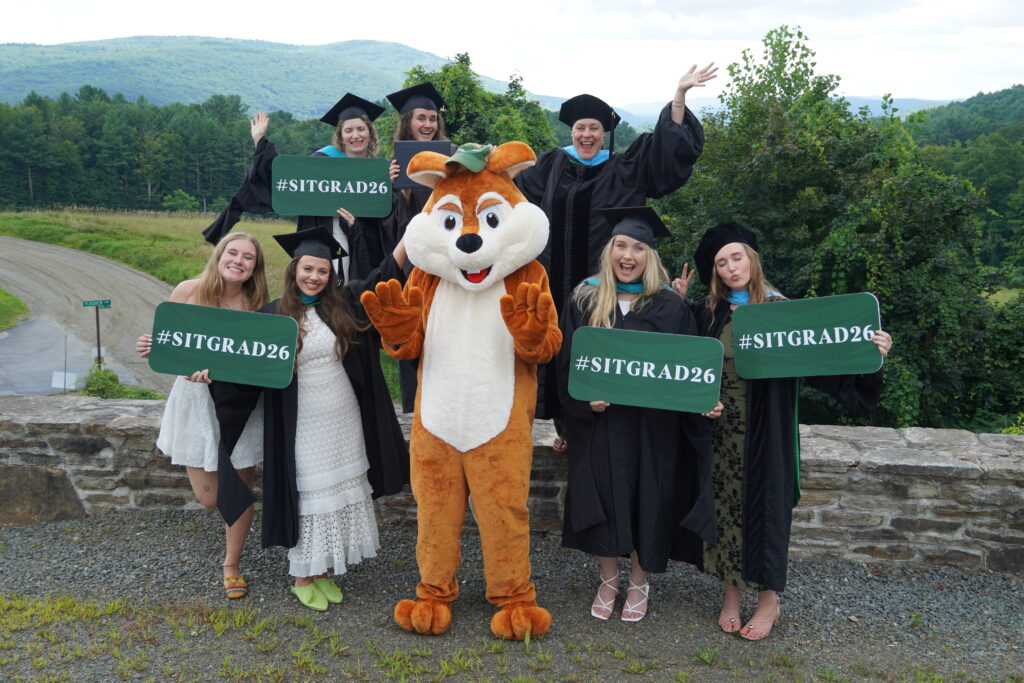
After the ceremony, graduates and guests gathered for a reception in SIT’s Stephen and Nita Lowey International Center. The day’s event was also marked by the return of SIT’s chipmunk mascot and an uplifting brass band. But after the celebration, the day’s messages from the podium will continue to resonate, charging the graduates to remain steadfast as they continue the work they have begun.
As Smith noted, careers may take unexpected turns, and the challenges graduates have chosen to confront may resist quick solutions.
But Parks reminded her classmates that while progress may be difficult to see, water can carve a path through concrete, and encouraged them to keep their work flowing.
“Don’t wait until the groove is visible to trust that you’re making one. You are all doing work that will change this world. We just have to take it one rainy day at a time and trust.”