


Finding your voice: Capstone research, balance, and life after graduate school
November 18th, 2026 | Alumni, SIT Graduate Institute
By Isabel Langlois-Romero

Isabel Langlois-Romero, a 2026 graduate of SIT’s global master’s in sustainable development practice, is a bilingual sustainable development and renewable energy researcher who works on decarbonization policy and interdisciplinary field studies. She employs participatory engagement practices across the U.S. and Ecuador to deliver equitable outcomes, especially with frontline and Indigenous communities. Here, she shares what it’s like to work on a capstone project while traveling to multiple countries as an SIT graduate student.
The capstone process: Letting deadlines be direction
Finding your voice through graduate studies can be an arduous but deeply rewarding process. SIT professors exposed me to new theories, skills, mindsets, experiences, and ways of being, but it's the solo journey of finding something worth investigating that truly brings everything together.
The capstone or thesis process is a rite of passage in any graduate program. Using the first semester as a testing ground for ideas is incredibly helpful, and getting to know the place you’ve just landed as you start the journey is important. Your coursework and final projects become opportunities to test the waters, to see what directions have momentum or speak to you.
As you move into the second semester, the pace quickens. Your professors will ask for commitments to ensure you have enough time to investigate your topic. The key is not letting deadlines drive fear but letting them serve as a framework.
We can get caught up wanting to be the researcher or scholar we admire in literature, and that aspiration can keep us from the necessary, and imperfect, route toward completion. For example, I wanted to change my theoretical framework midway through the year. However, with some guidance from professors and advisors, I ended up documenting the limitations and shortcomings of the theoretical framework instead. Changing course could have become a barrier to finishing altogether, and some of my most important findings and learning processes were intertwined with this theoretical framework’s application in my research.
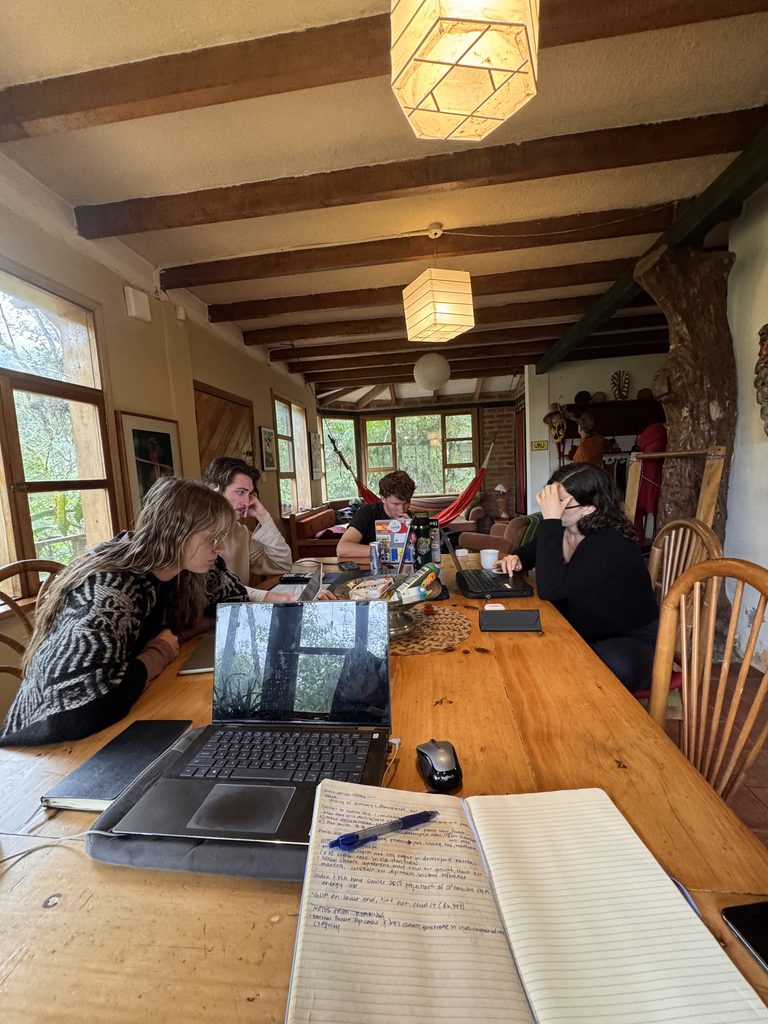
And don’t forget to look to your classmates for support. Your cohort will support you and talking through the capstone process with your classmates helps sharpen insights.
Balancing research while traveling and living
One of the most unexpected lessons of graduate school was learning to maintain classwork and work while life keeps moving. For many of the students in my cohort, that meant conducting research in new countries with language barriers while navigating feelings of being homesick or celebrating an engagement. The capstone process doesn't pause for travel or life, and in many ways, this type of movement in your studies will prepare you for the professional landscape you enter or re-enter after graduation.
Learning to carry your questions with you throughout your travel will also support the research process. I found that writing and finding moments of reflection in transit kept the capstone process as a part of my journey throughout the year. In this way, the academic structure of the capstone becomes something you internalize and reflect upon as a personal inquiry, not just in the classroom.
Why SIT? Finding purpose in a program built for the real world
Capstone research is an opportunity to come into your own voice and craft a new direction. I came to my master's degree in my early thirties looking for a transition from building sciences and renewable energy policy in the U.S. toward a broader vision of sustainable development where ecology, conservation, international perspectives, and Indigenous rights were part of the conversation. I knew I didn't want to sit in a classroom thinking about pressing climate issues internationally. I wanted to apply my professional experience through lived contexts, relationships, and research.
As a Colombian-American, I've long seen one of my purposes as building bridges, connecting people and purpose across political boundaries to the landscapes and cultures that have shaped our intertwined histories. In my first semester, I used courses in economics, public health, and anthropology to explore topics at the intersection of the Andean and Amazonian regions of Latin America. I used personal journals and class assignments to test how my own experiences, both personal and professional, could help me develop a meaningful inquiry.
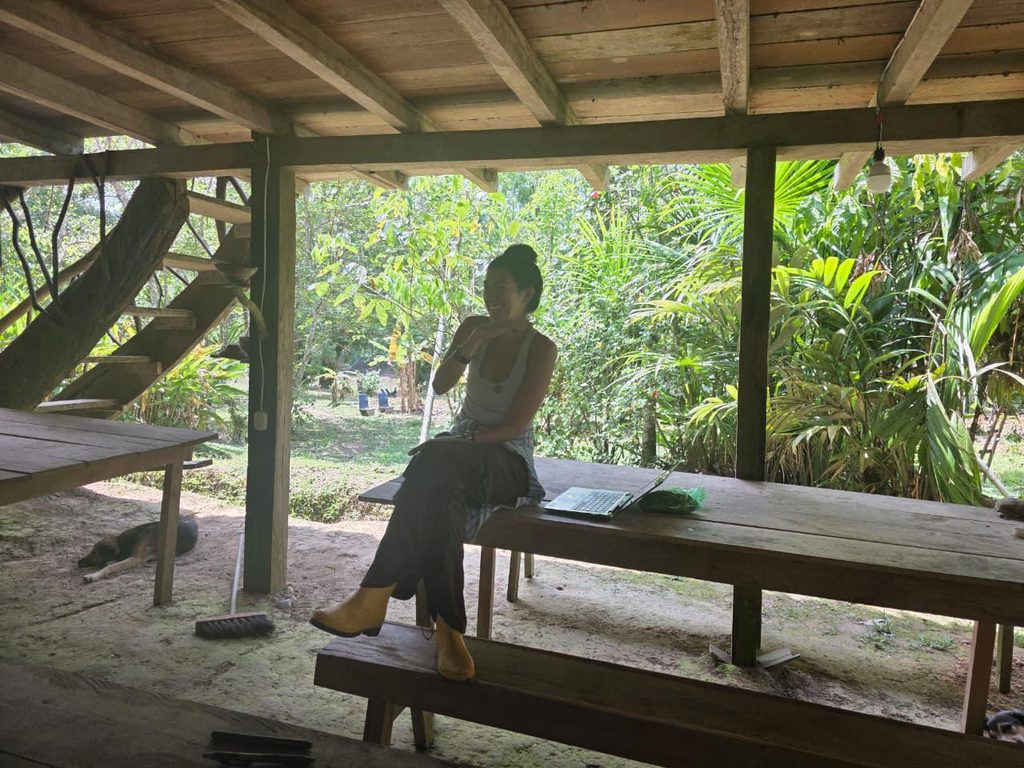
Around the middle of the year, I connected with the director of a local company in Ecuador, which allowed me to begin my practicum early and gain hands-on research experience in the Amazon, working on solar river development in an Indigenous community. I believe our dreams and intuition are important guides alongside our intellect, and after genuine relationships were built with community members, I stayed in touch. Not because I had decided this would be my capstone, but because I trusted in the time and relationships that had been built in a short period of time.
This is what SIT offers that's difficult to find elsewhere: It's a program that meets you where you are and enables you to bring your whole self—your history, your questions, and your relationships—into the research process.