



Inside SIT’s IHP Death & Dying program: One student’s day exploring Mexico City
May 20th, 2026 | IHP, SIT Study Abroad
By Joanna Tanger
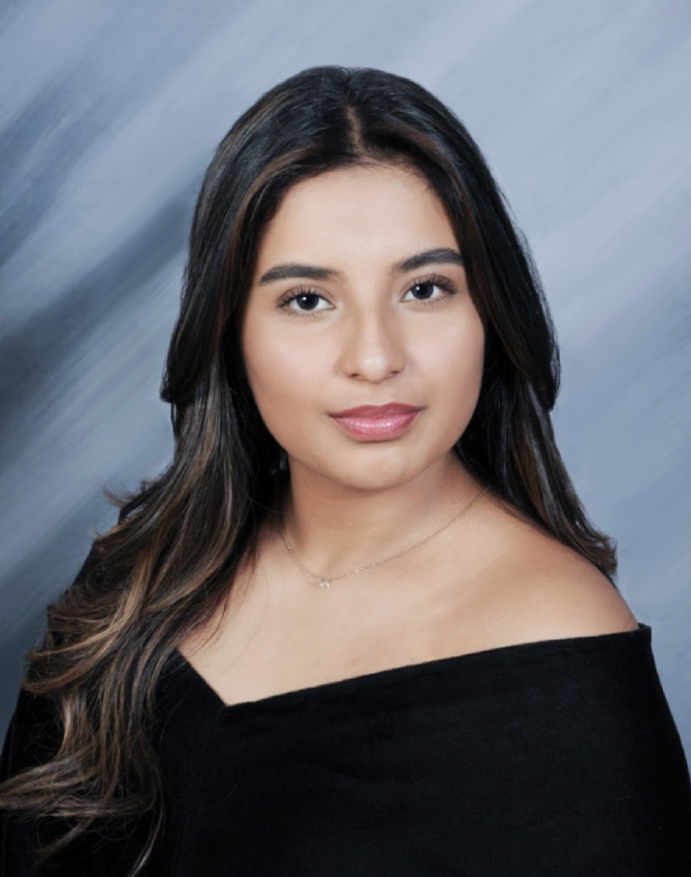
Imagine traveling the world while studying artistic expression, social movements, and cultural identities—all through the lens of death! SIT’s fascinating and unique IHP Death & Dying: Perspectives, Practices & Policies program takes students across four countries to explore how cultural beliefs about death influence everything from rituals and grief to healthcare, art, and community life. The program starts in New York City, continuing on to Ghana, Mexico, and Indonesia.
Paola Chapilliquen, an SIT IHP Death & Dying student majoring in education and sociology at Brown University, takes us through a day in her life in Mexico. While the program is based in Oaxaca, Chapilliquen brings us along on the week-long excursion to Mexico City. ¡Vamos a México!

7:55 a.m.
This is a fairly early morning as there is a set time for breakfast at the hotel. I wake up at about 7:30 a.m. and then go down to enjoy the breakfast buffet.
8:05 a.m.
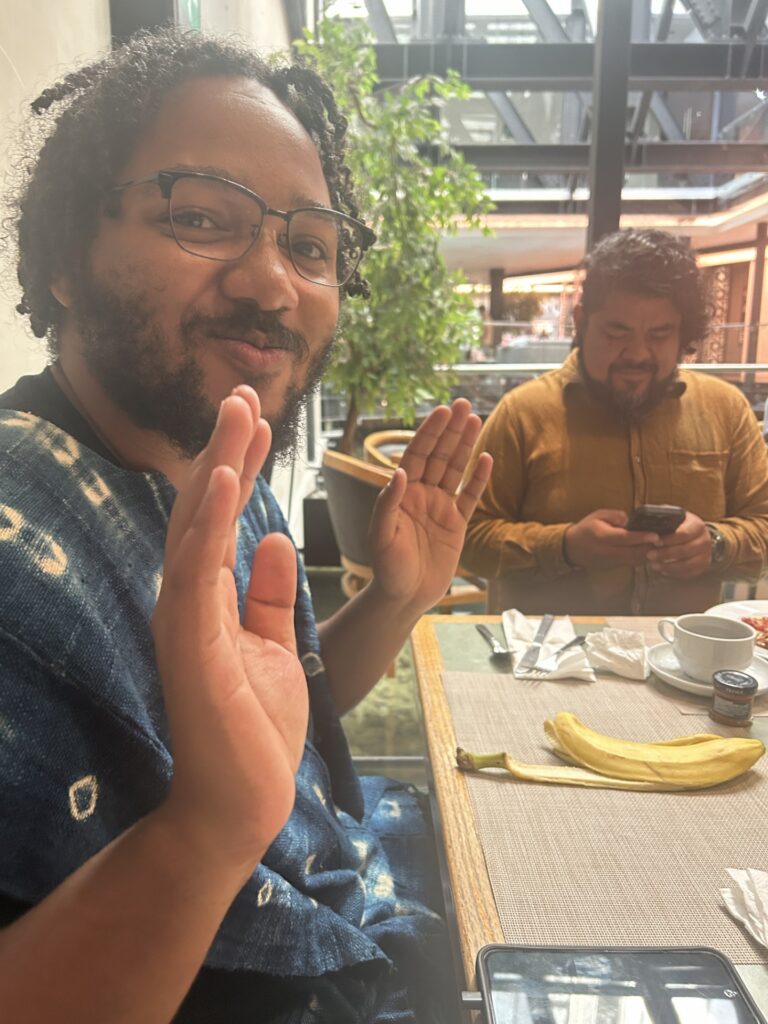
The rest of the team also comes down at about this time and we all share breakfast and conversation. In this photo is Dr. Noah Morton, a visiting faculty, and Gustavo López Mendoza, one of our coordinators in Mexico.
10:20 a.m.
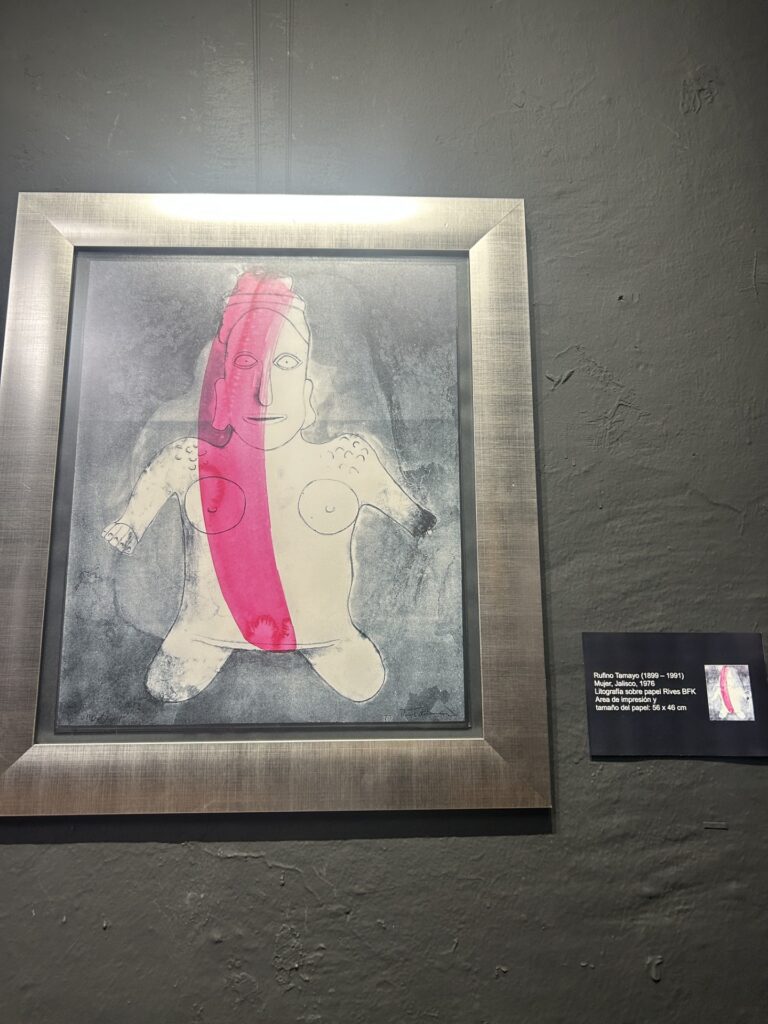
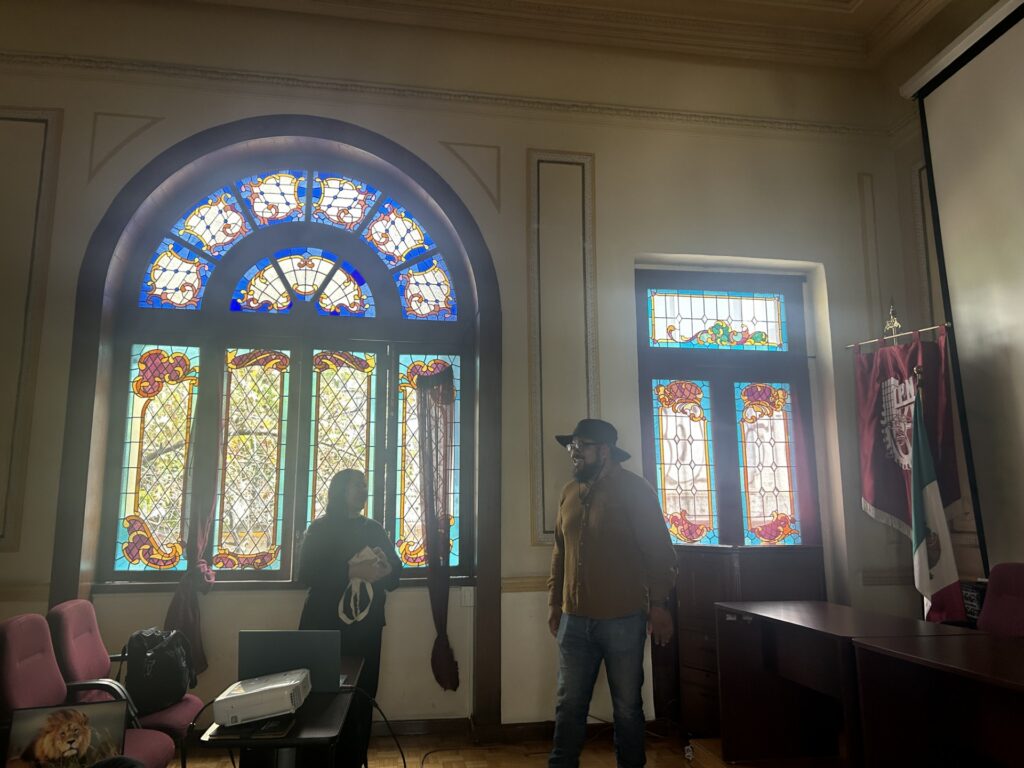
After breakfast, we have some time to get ready before going to a university building where we have class. Before class, we visit an exhibition hosted in the space and learn about the art in relation to Mexico City’s history.
10:25 a.m.
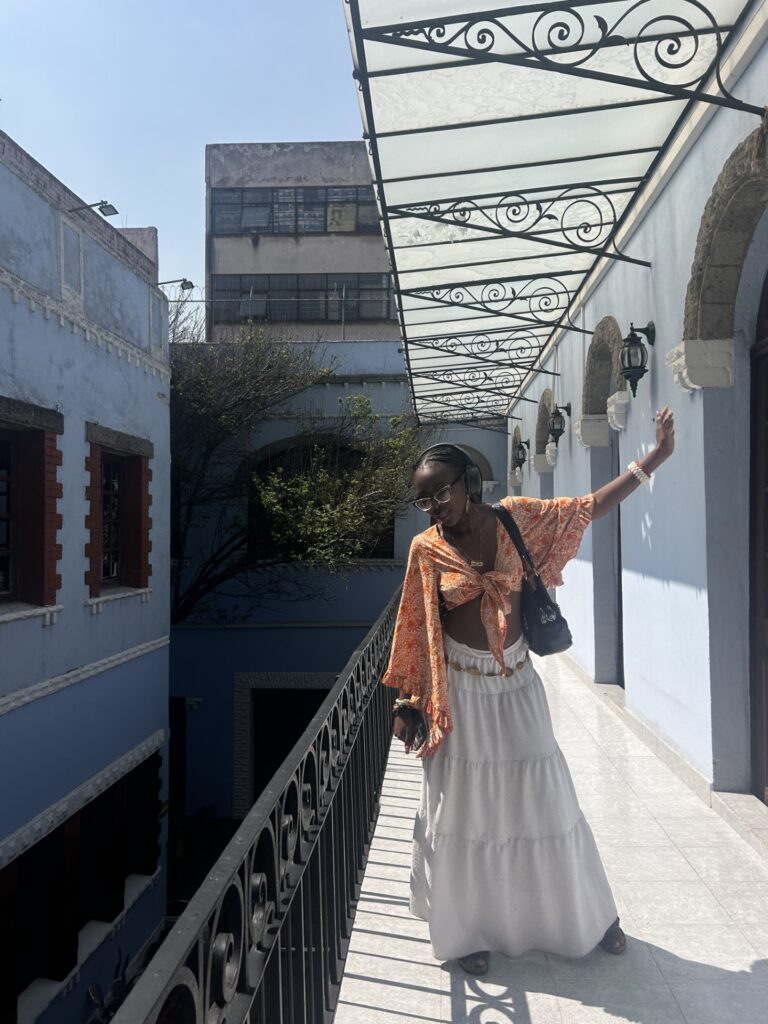
Here is my friend Jasmine outside on the terrace right before starting our lecture. The museum is a wonderful introduction and mode of getting us into the headspace for our anthropology class.
10:30 a.m.
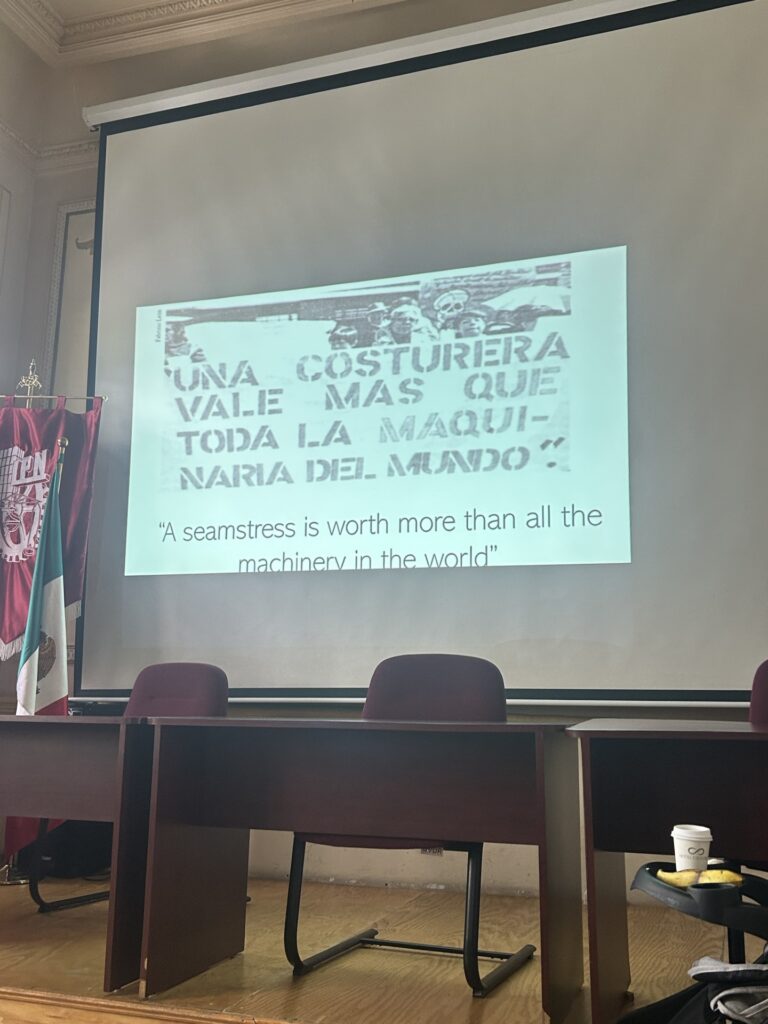
We have a two-hour lecture on the anthropology of risk with Professor Olivia Dominguez. We learn about Mexico’s history of inequality with regards to social, economic, and geographic stratification, as well as Professor Dominguez’s research on community rebuilding after natural disasters.
12:35 p.m.
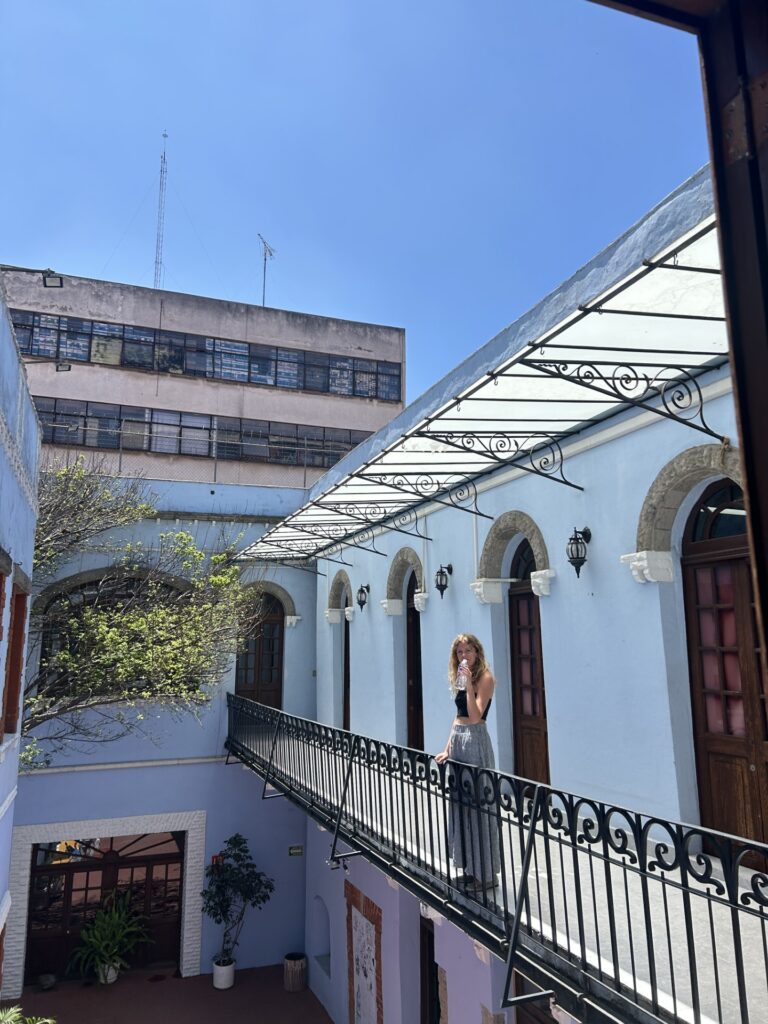
Here is my friend Carmen enjoying the sun after our lecture. We have a break for coffee, water, and some snacks provided by our coordinators. At the lecture, there are other university students, so we mingle with them as well. We have a lecture debrief with them after the break and share what it is like to be on a program centered around death and dying. Since many students study anthropology, they have some familiarity with the topic. It was great to talk with them and learn about different modes of teaching and studying death.
1:45 p.m.
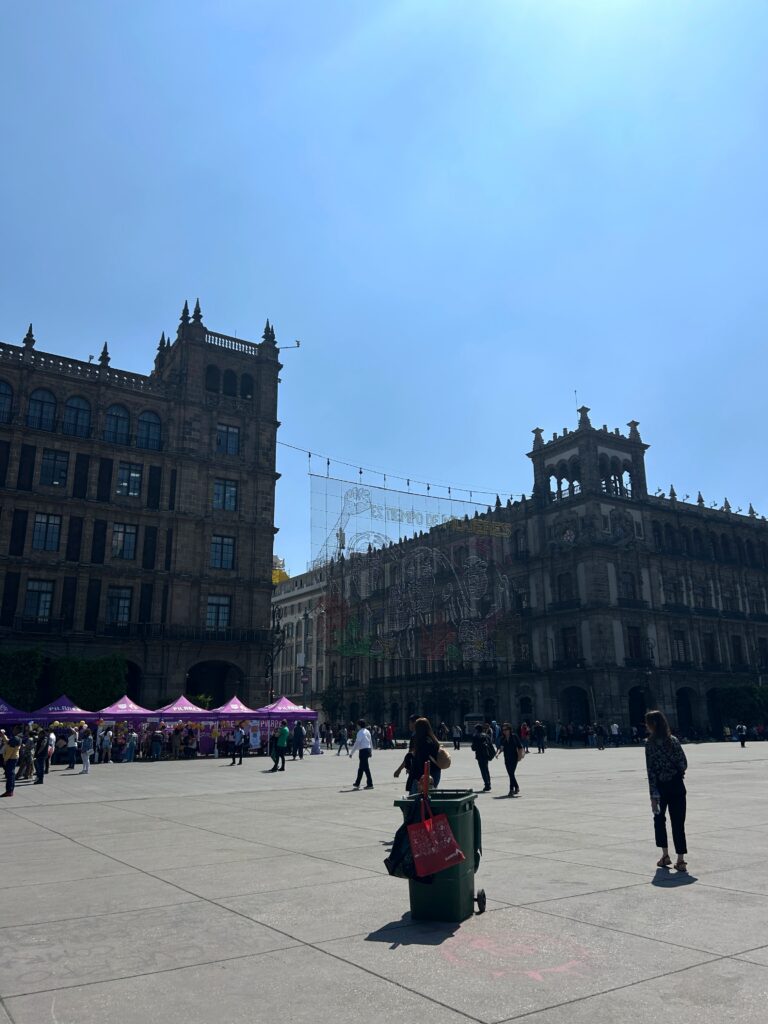
When the lecture and debrief end, we are free to explore the city. This photo is in the center of the historic district in Mexico City. There are many people wandering around and some people dancing and performing rituals.
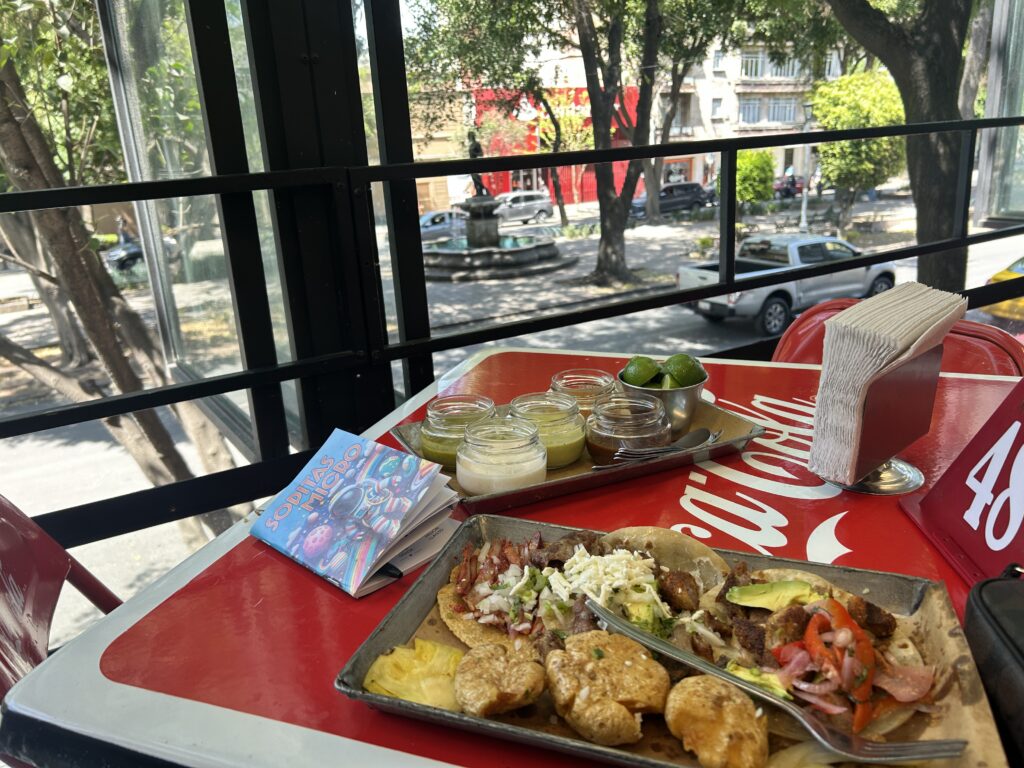
2:15 p.m.
After wandering around the city, I settle down to eat some tacos. I buy a mini word searches book and do puzzles as I eat and people watch.

5:40 p.m.
After lunch and more walking and shopping, I go to a coffee shop.
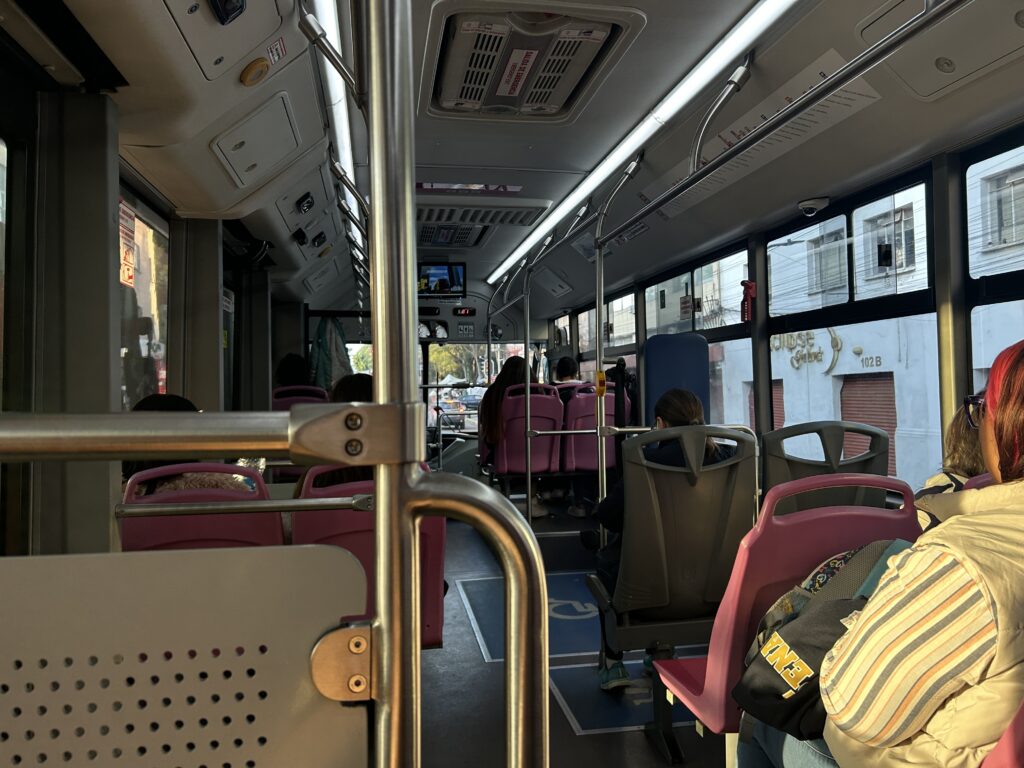
6:15 p.m.
I take the metro to our hotel. Pink seats on the metro designate the cars that are part of the “women and kids only” zone. During the ride, I listen to music on my headphones as I watch people on the streets making their way home too.
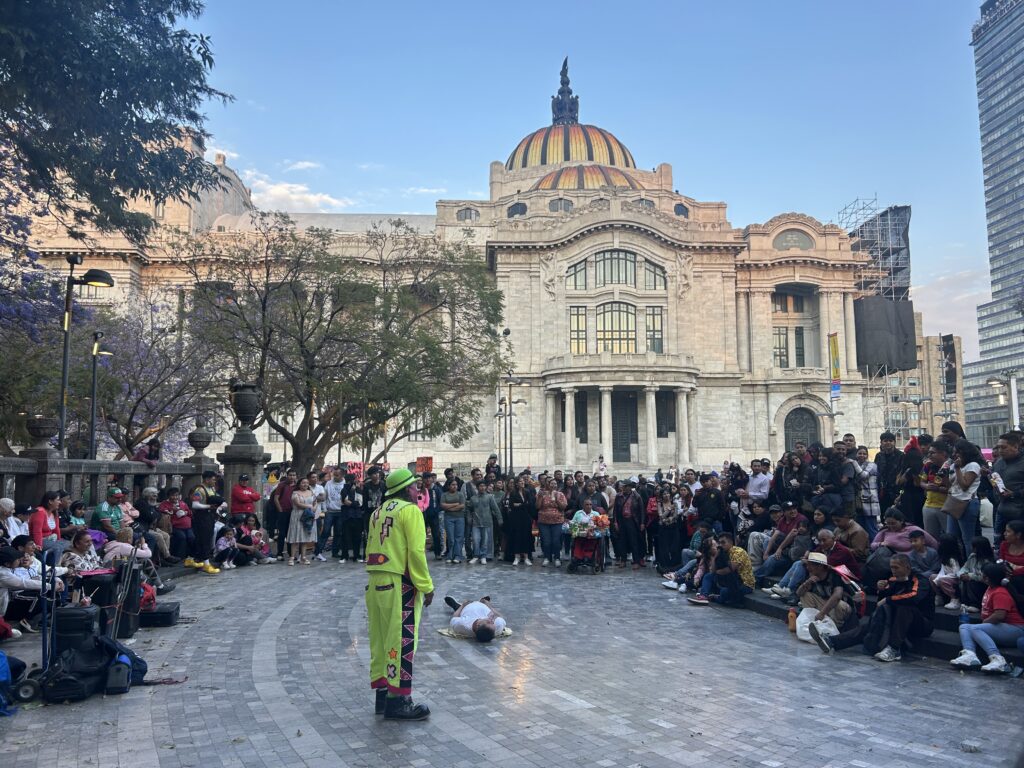
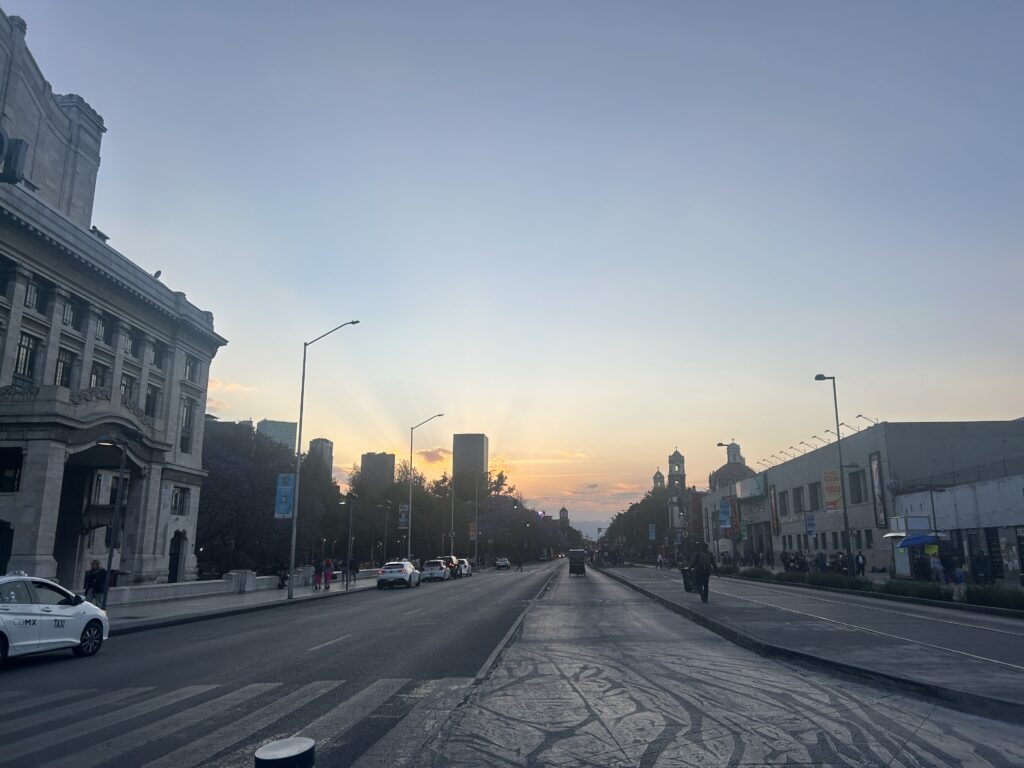
6:35 p.m.
When I get off the metro and walk toward the hotel, I see a comedy show in one of the public squares of the park. I stay and watch for a while as they make jokes and warrant public participation. After some time, I walk back to the hotel, enjoying the beautiful sunset and city view.
8:45 p.m.
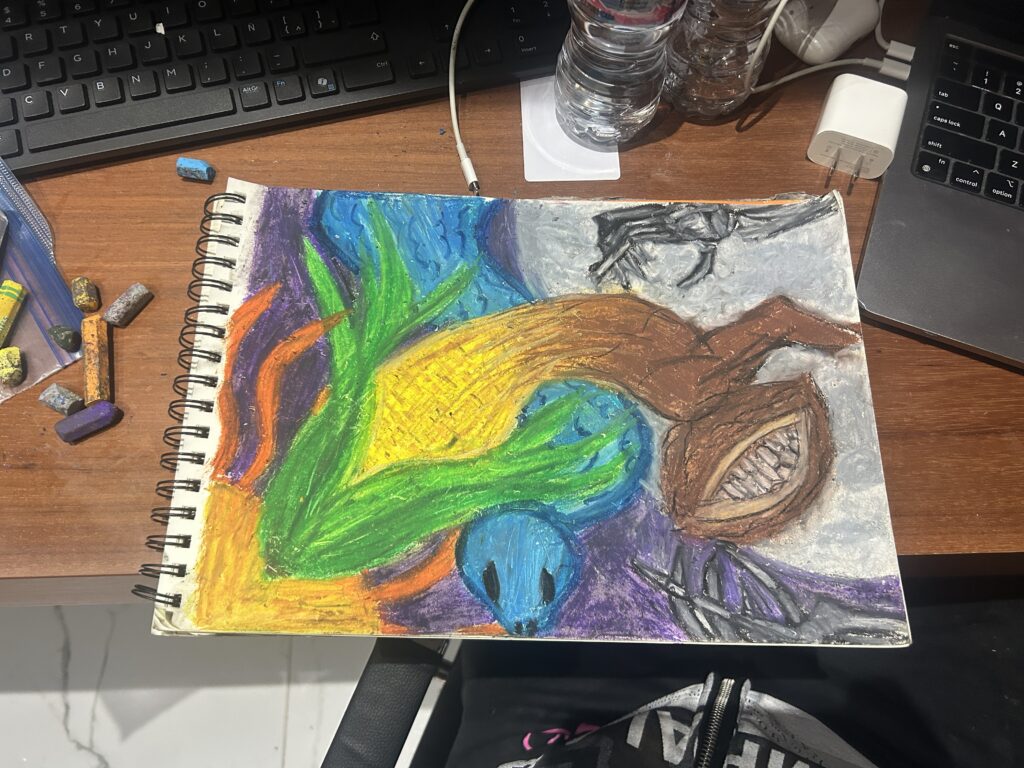
Upon getting to the hotel, I decide to rest briefly after a long and active day. I get dinner at the hotel and work on this assignment called, “A Cartography of Death.” I draw this image with oil pastel that reimagines maps through symbolism and represents Mexican cultural and Indigenous beliefs about life and death. These assignments serve as great points for reflection and understanding as we are oftentimes discussing heavier topics. Completing the assignments and having Dr. Morton as guidance for navigating these topics has been crucial to understanding and processing death studies.
Want to learn more? Discover a day in the life of another IHP Death & Dying student in Ghana and read a conversation with the program creator.